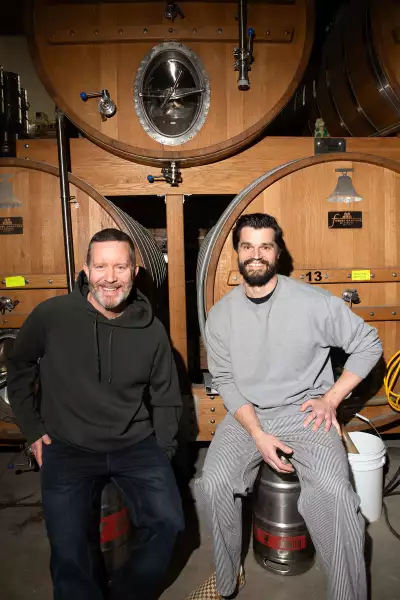
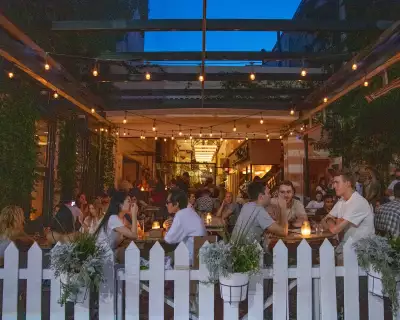
It's hard to remember Toronto's beer scene before Jelly King. Four years after Bellwoods Brewery opened on Ossington in 2012, it launched Jelly King Dry Hopped Sour — a juicy, peach-forward beer whose bright tartness helped reshape local drinking habits.
Founders Luke Pestl and Mike Clark knew they had something special. What they didn't expect was that the beer would develop its own identity, independent from Bellwoods.
"I think the point at which we realized it had taken on more of a life of its own was when we started to encounter people who didn't realize that Jelly King was made by Bellwoods," Clark says. "You'd find people that said they didn't even like beer, but they liked this one beer called Jelly King."
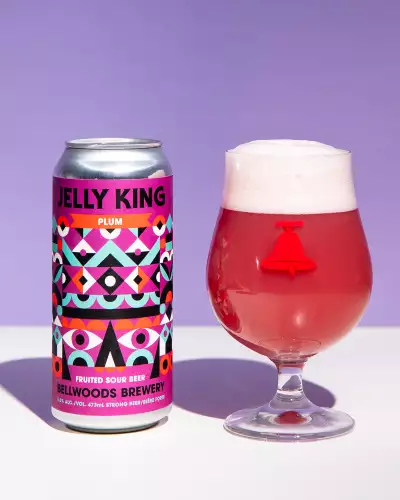
And it wasn't just Toronto. The beer quickly gained a global following, with bottles and cans of Jelly King popping up everywhere from Europe to specialty bottle shops in Asia.
"We would go to beer festivals or be travelling and talking about beer," Pestl adds. "Some people wouldn't recognize Bellwoods, but then you'd start talking about Jelly King and they'd say, 'Oh yeah, I know Jelly King.'"
For a few years, the pair had been trying to develop a highly drinkable sour beer with a clean fermentation profile that didn't require extended aging or barrels. Once they succeeded, they needed a name to match this crushable, soon-to-be legendary beer.
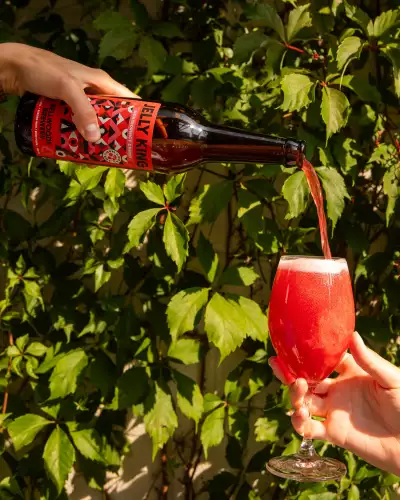
"One of the qualities of that product was that it had a flavour note and aroma of fuzzy peach candies," Clark says. "We were brainstorming names and we arrived at Jelly King. We liked the imagery; we liked what it invoked."
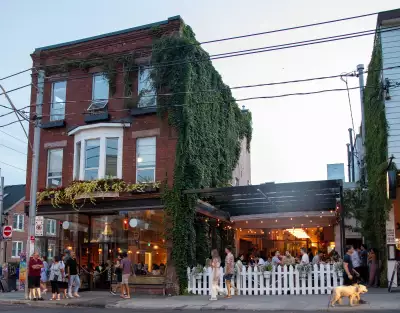
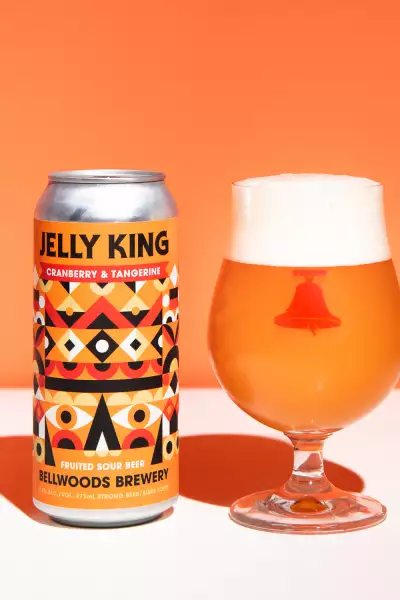
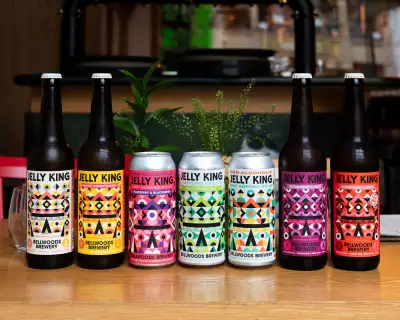
If Jelly King looks as familiar as it tastes, it's not by accident. The artwork on the cans is part of a longstanding collaboration between the brewery and Toronto-based design studio Doublenaut.
"When we started working with them, they were just neighbours a couple doors down," Clark says. "We were looking to make our labels more distinct, and they immediately started pitching ideas that were exactly what we wanted."
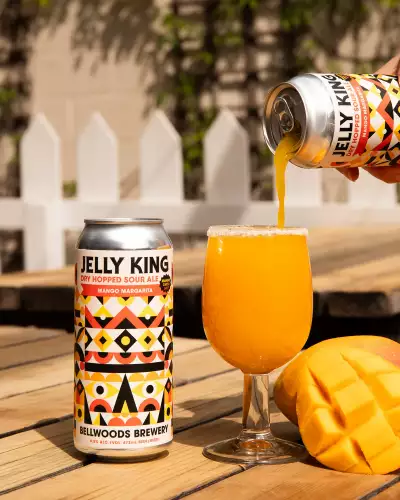
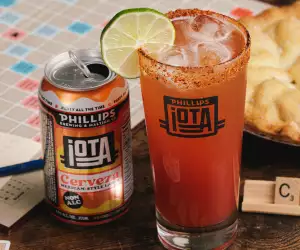
Since the first release in 2016, Jelly King has become one of Toronto's — and the country's — most defining craft beer brands, rolling out a staggering 91 flavour combinations, from Mango Margarita to Boysenberry. Most recently, the Ossington brewery has launched a family of alcoholic and non-alcoholic real fruit seltzers.
"We wanted something with a very fruit-forward, real-fruit character: tangy and juicy," Pestl says. "We were struggling to brand this family of products, and then Mike suggested we just bring it into Jelly King family and expand that. It made a lot of sense because it was the same way we were approaching that group of beers already. The same creativity, same sort of flavour focus."
Despite the seltzer boom, and the overall shift towards lower-calorie, lower-sugar alcoholic alternatives, Pestl admits that they were a little late to the game. However, in true Bellwoods spirit, the team wanted to play around with the idea and trial a few iterations before feeling out exactly where they wanted to go in that product category.
"It's also a reflection of the fact that we've always made what we like to drink," says Clark. "Our tastes are changing, just like everybody else's, and we want to try different things."
In addition to a move towards seltzers, the team has noted that, like so many others, their alcohol consumption is changing. This project wasn't just a cultural realignment — it involved solving some pretty technical snafus.
"To make really good non-alcoholic beer, it's not easy," says Clark. "It's not exciting when you're dumping batch after batch, which is something we had to go through. But, like all things, we kept at it and landed on something that we were really happy with."
Over the years, the Bellwoods team has seen its share of trends. From light lager and radlers to hefty high-ABV barrel-aged beer, they've seen it all. So how do they decide when an idea is a fad or something truly worth pursuing?
"We rely on our instincts a lot," Clark says. "We have a group of very like-minded people here who have been consuming things together for a very long time."
Of course, not everything is a winner. Though Bellwoods isn't afraid to experiment, they're also comfortable abandoning an idea if it doesn't work. "Anything that's flawed, we're pretty ruthless about dumping it down the drain," says Clark.
Take the smoked pepper saison they brewed with a collaborator a couple of years ago. "It was horrible," Clark laughs. "It had zero hop character and tasted like vegetable broth."
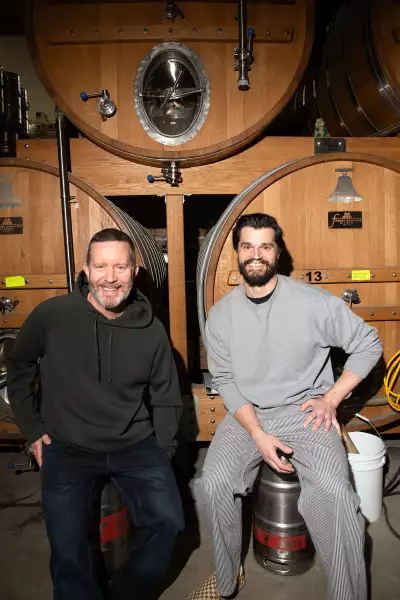
The brewery balances the commercial viability of products like Jelly King with more niche products — like their barrel-aged beers — even though there may not be the same appetite for them. Every year, Bellwoods releases a new Motley Cru barrel blend. "We sort of treat it as our birthday: Motley Cru Day. We've come out with a different batch of Motley Cru."
"We might only make 2,000 bottles in a year," Pestl says, of the multi-year technique, which is closer to winemaking than beer. "We love the process and we think it's awesome, but we know it's a very small market."
Bellwoods Brewery may have just celebrated its 14th birthday, but there are no signs of growing pains just yet. Pestl adds, "Many teenagers still don't have a fully developed frontal lobe.” Likewise, this Toronto success story is only getting better with age.