You could say that Canada was built on whisky. John Molson first brought the category to Canadian soil in the early 1800s. During American prohibition, Canadian distillers made millions running bootlegging operations, which helped fuel much of the country’s economic growth.
When Prohibition ended and American whiskey came back into play, Canadian whisky (no e, eh?) was eclipsed by its Southern neighbours. American bourbon was big and bold, while Canadian whisky earned a reputation for being light, polite and served from a purple bag.
But these stereotypes barely capture what Canadians are doing with whisky now. These days, the category is blooming, fuelled by both young-gun distillers and seasoned spirits brands making cool, curious and quality-driven takes on Northern whisky.
Nataschia Wielink
All of this is coming into greater focus as American whisky has been banished from LCBO shelves in response to U.S. President Trump’s tariffs. “Pulling bourbon off the shelves has had an enormously beneficial outcome for Canadian distillers, large and small,” says Davin de Kergommeaux, author of Canadian Whisky, Updated and Expanded. “People are trying Canadian whisky and saying, ‘Man, I wish I’d discovered this sooner.’”
There are rules to making whisky in the Great White North. The grains must be mashed, distilled, then aged for at least three years in small wood barrels (less than 700 litres) on Canadian soil. Once it’s rested and ready, the whisky must come in at 40 per cent alcohol by volume.
By whisky-making standards, these rules are pretty lax. Unlike bourbon country or the Scottish Highlands, there’s no regulatory pickiness about oak, grain, barrel size or additives. (Comparatively, scotch can only be made from water and malted barley, while Tennessee whisky must be made from a mash of at least 51 per cent corn and aged in new, charred oak barrels.)

Geoff Dillon, owner of Dillon’s Small Batch Distillers
For producers, this means creative freedom — the capacity to work with whatever grain they fancy, age the whisky in barrels of different sizes and play with different styles. “Canada is a really fun place to make whisky,” says Geoff Dillon, owner of Dillon’s Small Batch Distillers.
“Canada is a really fun place to make whisky”
“Within those parameters, our possibilities are vast,” says Dr. Don Livermore, who holds a PhD in brewing and distilling, and serves as master blender at Hiram Walker (the parent company of J.P. Wiser’s and Lot No. 40, which Dr. Livermore oversees). “We can craft whiskies from mixed or single-grain mash bills, experiment with a wide range of distillation methods and mature our spirits in countless types of casks, whether new woods or reused barrels.”

Dr. Don Livermore is the master blender at Hiram Walker. J.P. Wiser’s and Lot No. 40 are made under his watch
The issue is that some distillers have taken advantage of these carte blanche rules and cut corners, adding things like fake caramel colouring, sweetener or even wine to the whisky.
“The legislation around Canadian rye can be confusing, as it does allow a great bit of freedom when it comes to experimentation,” says Tim Wilson, Dillon’s’ master distiller. “It’s what’s referred to as the 9.09 rule — the ability to add 9.09 per cent of any spirit or wine that’s at least two years old to whisky, and blend without stating that on the label.”

At its best, Canadian whisky can be an exacting, craft-driven interpretation of terroir. At its worst, it’s subpar swill; cheap neutral liquor made elsewhere, imported, aged and adulterated with caramel colouring and other icky additives.
“The challenge here is for the consumer, as there is little rigour around how that 9.09 per cent rule is used,” continues Wilson. “Canadian whisky as a whole is not the most transparent.”
“Canadian whisky as a whole is not the most transparent”
This wave of pretty middling Canadian whisky — real bottom-shelf, bar-rail bottles — didn’t sit right with producers. “We’re part of a growing movement that’s redefining what Canadian whisky can be,” says Wilson.

Tim Wilson, Dillon’s master distiller, is well-versed in the written and unwritten rules of making Canadian whisky
Canada is a perfect place to make whisky. There are the icy, clear waters that trickle down from the mountains. There’s the endless landscape of rye and wheat fields, and a rich heritage of whisky production.
“Agriculturally, our country is rich in resources and a leader in grain research, developing new hybrids that allow us to explore flavours while improving efficiency,” says Dr. Livermore. “For a master blender, this opens doors to innovation — creating new taste profiles while delivering added value to consumers.”
So Canadian distillers had the lightning — all they had to do was bottle it. That’s now happening in spades.
“There’s a quiet revolution happening in Canadian whisky right now,” says Wilson. “There’s incredible momentum among small, independent distilleries, especially in Ontario, Alberta and B.C. These producers are focused on honesty, craftsmanship and regional expression.”
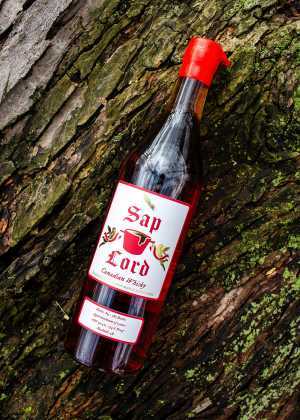
Some distillers are playing with grains. Sheringham Distillery on Vancouver Island is using whole-grain red fife wheat, the oldest cultivated strain in the country, brought over from Scotland in the 1800s. In a hat-tip to that heritage, they’re making single malt-ish bottlings from it. De Kergommeaux is a fan of Last Straw Distilling out of Vaughan, Ontario. “They rescue grains, like Argentinian wild rice, that wouldn’t be otherwise used.”
Others are reinterpreting style. Sons of Vancouver Distillery, who took home top honours at last year’s Canadian Whisky Awards, is exploring all the different ways you can showcase rye. While the spirits are serious, the distillery is less so — special releases boast names like Palm Trees and a Tropical Breeze, and Cigarettes on a Leather Jacket.
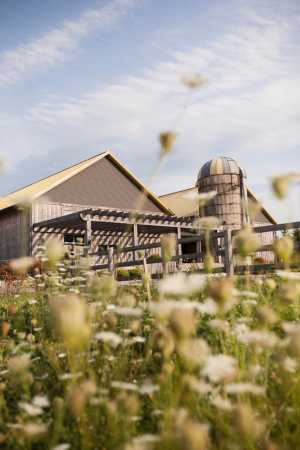
Willibald Farm Distillery in Ayr, Ontario
In Ayr, Ontario, Willibald Farm Distillery is looking to shrug off Canada’s reputation for light, watery whisky, pulling cues and inspiration from bourbon producers south of the border.
“When we launched in 2013, we felt like most of the whisky in Canada was in a similar vein: caramel-forward, softer whiskies with a light oak character and a gentle spice,” says co-founder Cam Formica. “We felt like the Canadian whisky world could benefit from a little more oak punch and spice.”

Cam Formica is one of Canada’s new distillers with ideas to put the country back into the world of elite whisky
“We grew up with the concept of Canada being a cultural mosaic,” he continues. “So we didn’t feel the need to subscribe to tradition. We embraced an infusion of ideas gathered from our travels and tastings abroad.”
Even the larger-scale brands are turning out interesting, innovative bottles. J.P. Wiser’s is finishing 27-year-old whisky in Mizunara oak, a Japanese wood that adds hints of sandalwood. For Forty Creek Distillery’s Bill Ashburn’s pre-retirement swan song, he released Chronology, a blend of four distinct whiskies, the oldest of which was distilled in 1992.
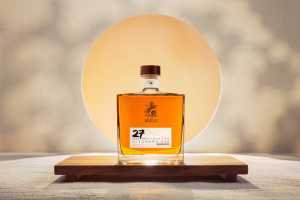
J.P. Wiser's 27 Year Old Mizunara Oak goes for $599.95 a bottle at LCBO
The landscape of whisky-makers has also changed. There are women stepping into major roles, like Caitlin Quinn (formerly Eau Claire in Calgary) and Maria Palafox at Alberta Distillers (who make Canadian Club and Reifel Rye). “[Maria] is the most exciting thing happening in Canadian whisky right now, and no one knows her because she stays in the lab all day!” says de Kergommeaux.
All of these makers are also benefitting from timing.
With American alternatives no longer available in Ontario — victims of a retaliatory trade war between the United States and Canada — whisky drinkers are forced to look local to replace their Jack Daniel’s, Jim Beam and Buffalo Trace. Bourbon is out, as is American rye and Tennessee whiskey. As a result, Canadian drinkers’ patriotism has kicked in.
The landscape of whisky-makers has changed
Indigo sent De Kergommeaux on another book tour recently, two years after the release of his latest edition. “The book is moving numbers, simply because people were trying to find good Canadian whisky.”

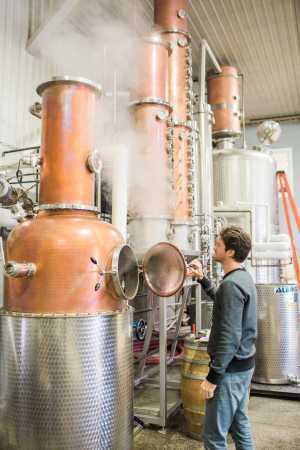
Inside Hiram Walker Distillery in Windsor, Ontario
The rest of the momentum is modernization. There’s new research and innovation in the category, allowing distillers to make high-quality whisky with greater ease. Technology has advanced, and innovation in the craft beer space has brought forth new ways to work with grains, malt and yeast.
“When I began my career in 1996, Canadian whisky was facing an industry slowdown,” says Dr. Livermore. “Since then, the category has transformed — modernizing equipment and processes, introducing innovative products and elevating the portfolio with premium, highly aged whiskies featuring unique cask finishes.”
“Canadian whisky has so much potential, and I think we’re just scratching the surface,” says Wilson. “The future is local, it’s honest and it’s full of flavour.”
Canadian whisky worth trying
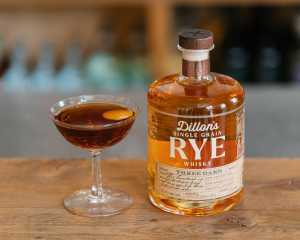
Dillon’s Rye Whisky, $49.95
The mission of Dillon’s flagship rye: Keep everything within a 100-kilometre radius of the Beamsville distillery. Bold, spicy and richly nuanced, this spirit is an all-Ontario project, from the rye grain to the Ontario oak.
Last Straw Distillery Stout Whisky, $75
Hidden behind an unassuming storefront in an industrial area of Vaughan comes one of the most interesting distilleries in the province. Their curious, quirky approach to whisky has them pairing things like Argentinian wild rice with rye, and stout with whisky, and turning them into wildly drinkable serves.
Spring Mill Distillery John Sleeman & Sons Traditional Straight Whisky, $54.95
John Sleeman’s ancestors were Canadian alcohol royalty — their beer smuggling business during Prohibition counted Al Capone as a client. So when he launched his own distillery a few years back, the bar was high. Their flagship whisky, aged in charred American white oak casks, is complex, punchy and supremely sippable.