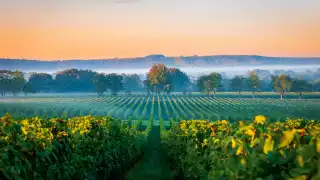
It’s a warm day in the middle of an unusually scorching spring when I find myself weaving amongst the sweeping vines of Devon’s Sandridge Barton wine estate on a grumbling ATV, beside CEO and head winemaker Duncan Schwab and the vineyard’s resident cockapoo, Oak.
I mention the weather, as Brits so often do, because it is the U.K.’s poorly reputed climate that has long convinced wine lovers that no good thing could come out of an English vineyard. But a renaissance has slowly been rumbling, thanks to a slew of innovative winemakers making the most of Blighty’s unique viticulture — consisting of cooler (but warming) weather patterns, a diverse range of grape-friendly soil types, and sheltered, south-facing slopes.
England’s wineries are finally gaining well-deserved recognition, growing everything from the ‘sparkling holy trinity’ of chardonnay, pinot noir and pinot meunier to the perhaps more obvious German grape bacchus — and in Schwab’s case, madeleine angevine, a French variety from the Loire Valley.
From Doubt to Renaissance: The Rise of English Wine
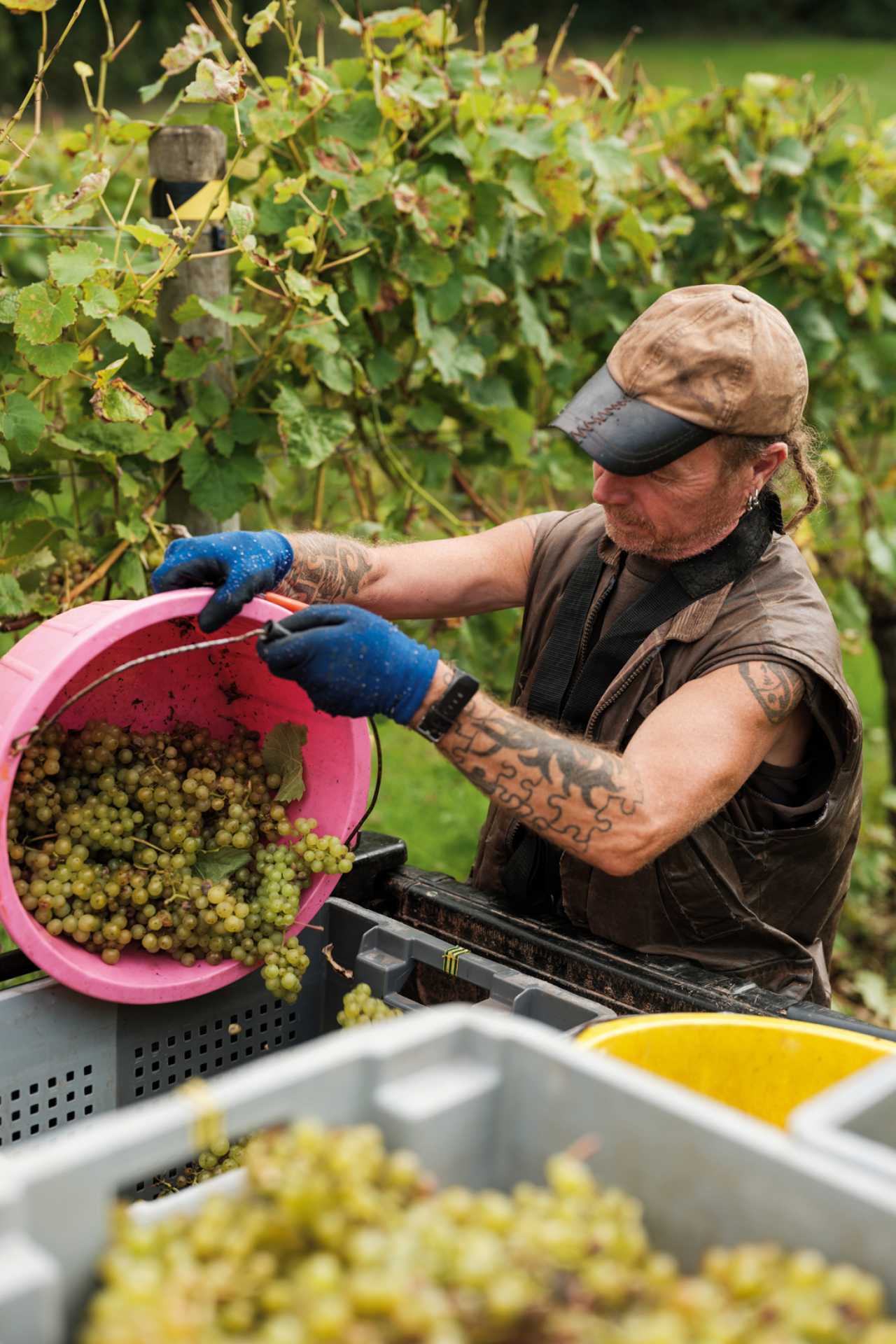
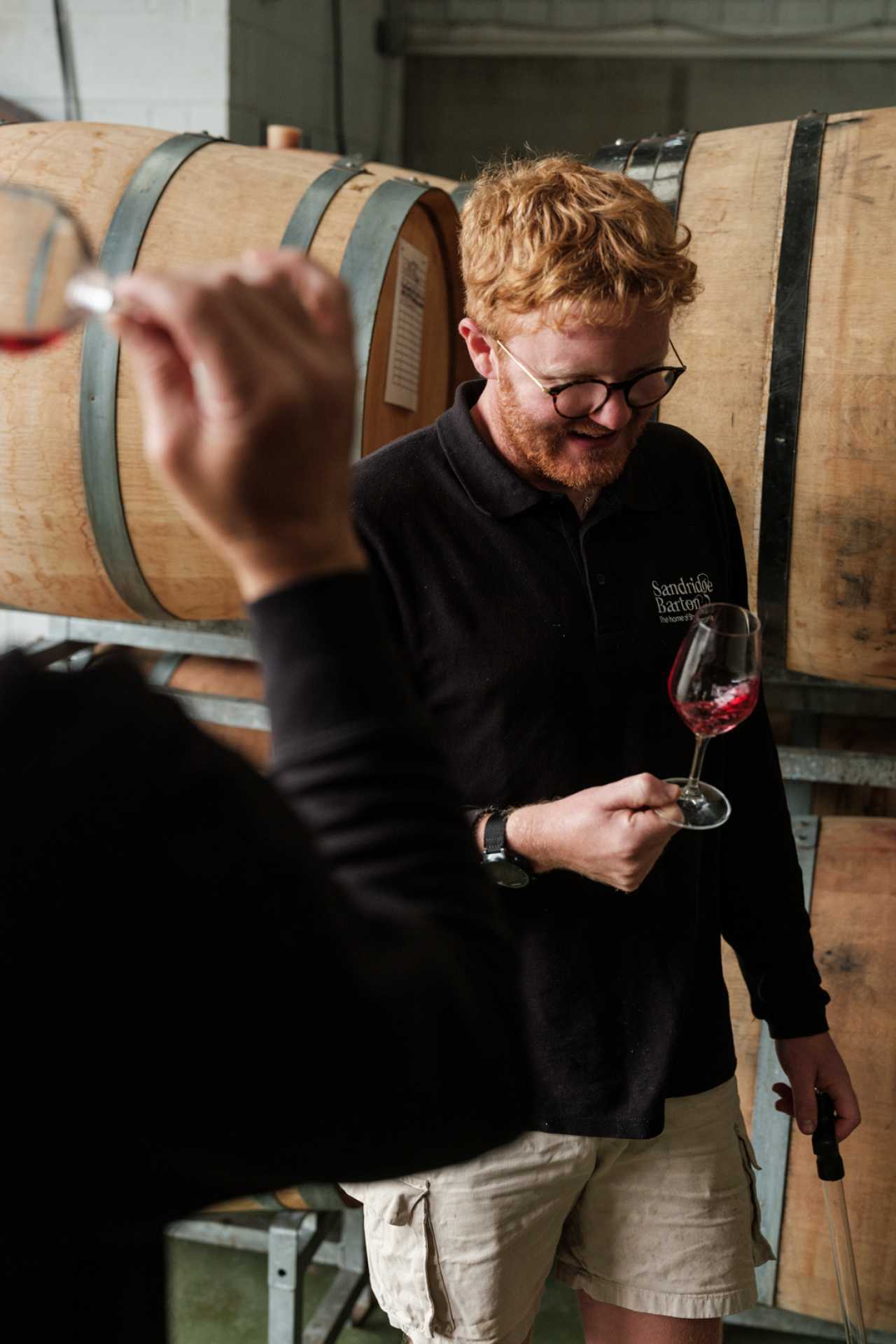
“Mad Angie, as we affectionately call her,” he jokes as he gestures to the vines. The estate first experimented with the then little-known grape back in the 80’s, discovering that it thrived in England’s South Western climate — and produced a crisp, dry flavour. “We wanted a more French-style wine, rather than the sweeter styles being made with the likes of müller-thurgau in England at that time,” he says. “It’s still our mainstay to this day.”
When I sample the estate’s best-seller Dart Valley Reserve — a light, easy-drinking white wine — I can see why. Soft and fresh with a kiss of citrus, it’s an ideal companion to my green surroundings on the banks of the River Dart. I can’t resist buying a bottle to take home with me.
While England’s still wine scene is certainly a burgeoning one, it’s the bubblier blends that have firmly put them on the world map. Venturing eastwards, you’ll find the perhaps better-known English ‘wine country’ — where the picturesque counties of Hampshire, Sussex and Kent boast chalky soils that mirror the terroirs of France’s Champagne region.
In recent years, headlines have hailed England as ‘the new Champagne’, bolstered by the fact that numerous French houses have recently acquired land in England, tempted by the optimum growing conditions. But it’s a handful of hard-working homegrown wineries that truly discovered England’s capacity to produce impressive sparkling grape blends. The more I learn, the more I realize that most early successes were a result of blind faith, curiosity and a whole lot of graft.
The Pioneers Who Put English Sparkling on the Map

First to do it was enterprising American couple Stuart and Sandy Moss, who launched Sussex’s now-famed Nyetimber vineyard back in 1988 by planting the first chardonnay, pinot noir and pinot meunier vines on English soil — something that was largely scoffed at at the time. Their first vintage, a 1992 Blancs de Blancs, was at first met with disdain, but eventually went on to win the gold medal in the International Wine and Spirits Competition. Many likened it to a top vintage from Champagne.
As history goes, it was actually Gloucestershire-born scientist Christopher Merret who, in 1662, first discovered the method of adding sugar and yeast to wine to create a fizzy finish — a technique that later gained fame as the ‘Méthode Champenoise,’ which is used to make champagne. Since sparkling wine was first discovered in England, most English sparkling winemakers are keen to separate themselves from the Champagne comparisons, however flattering they might be.
“It’s always nice to be considered on par with Champagne — it undoubtedly has a reputation for high quality,” says Mary Bridges, the impressive head winemaker at Kent’s Gusbourne estate (England’s most-awarded sparkling wine producer, and arguably one of the best-known labels). “But I think we sit alongside each other. One isn’t above the other.” When I press her for a distinction, she adds: “English wines have a core of freshness that doesn’t ever fade. The more mature the wine gets, the longer on the cork, it’s still got that energy right at the centre of it. You can always tell the difference between a glass of champagne and a glass of English sparkling.”
Cool Climate, High Acidity, Distinctive Character
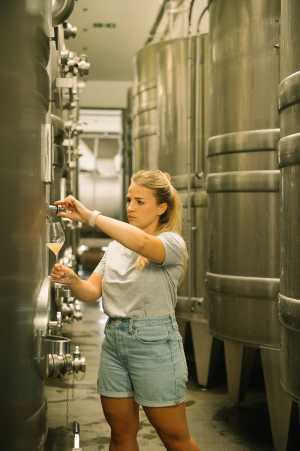
That zippy freshness is what English sparkling wines have become renowned for — a testament, I’m told, to their slightly cooler climate and longer ripening periods. During a tour of the historic Nyetimber vineyard on yet another sunny day, I chat with the heritage producer’s brand ambassador and wine expert Charles Lowe, who schools me on flavour.
“Latitude is one of the most important factors,” he says. “Our sunlight intensity is less here — less than in France or Spain, where the sun might feel hotter even if the temperature is lower, because of their closer proximity to the equator. That means our growing season is a lot longer. The longer your growing season, the more acidity you hold on to. A lot of that signature freshness is because we have a bit more acidity in the fruit.”

Demand for those crisper notes is only growing. In 2023, it was estimated that over three-quarters of the wine produced in the U.K. was sparkling. You’ll find English fizz being drunk in London bars, country pubs, at pop-ups and festivals. It’s a regular on most reputable restaurant wine lists — both locally and, increasingly, globally. The vineyards themselves are even attracting visitor attention, not unlike other wine regions across Europe, as wine-lovers flock to tastings and cellar doors nestled in the countryside for a truly English experience.
An English Wine Identity, Fully Formed
But whether it’s still or sparkling, there’s nothing quite like sipping a locally grown blend amongst rolling green countryside, surrounded by heritage architecture and sprawling wildflowers. While the French are known for their chateaux, many English estates are home to historic barns and farmhouses, with connections to the Domesday book or the Tudor dynasty. It all feels, if I do say so myself, very English.
I’m told by various winemakers that wine tourism in the U.K. is only growing; the Tinwood wine estate in Sussex recently welcomed visitors from Texas and Norway, for example. Perhaps it’s finally time we put those theories to bed — English wine has officially shaken off its dire reputation.
Uncorking England’s wine regions
Forming a horseshoe around London, and stretching down to the sea, the U.K.’s winegrowing areas are making waves.
The Southwest

It might be better known for its cider, but the South West is quickly becoming wine country. Home to the counties of Devon, Cornwall and Dorset, the South West coast of England is gaining recognition for producing some of the country’s finest wines, thanks to diverse landscapes and soil types. You’re likely to find more still wine varieties to sip on here, as well as sparkling.
Must-visit vineyards: The Sandridge Barton Estate, formerly Sharpham Wines, recently found a new home on the banks of the River Dart near Stoke Gabriel, a quintessential English village in Devon. Join one of the in-depth vineyard safaris or stop by for a self-guided tasting in the winery’s sunny courtyard. In Cornwall, the Trevibban Mill Vineyard is the perfect place to enjoy a glass overlooking wildflower gardens and sweeping vines.
Hampshire
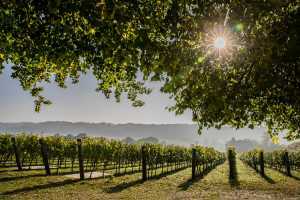
Much like Sussex and Kent, Hampshire benefits from those chalky soils popular with sparkling wine production, as well as a moderate maritime climate.
Must-visit vineyards: The Hambledon Wine Estate is England’s oldest vineyard, first planted in 1952. Today, it offers a recently opened fine-dining restaurant, as well as detailed winery tours and tastings. Further inland, you’ll find the younger, more modern Black Chalk — where they serve my personal English sparkling of choice.
Sussex
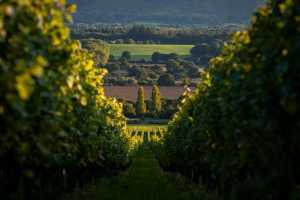
Sussex is at the heart of English viticulture thanks to its now-famous sparkling wines. You’ll find many vineyards on the picturesque South Downs, a range of rolling chalk hills that meet the coast and offer some of the country’s best vistas.
Must-visit vineyards: The elegant and historic Nyetimber Manor Vineyard is well worth a trip if you can — though tours are only available during open days (visit nyetimber.com for info). Elsewhere, the slick Tinwood Estate in West Sussex offers regular tours and tastings, with an on-site restaurant and luxury lodges on-site should you wish to stay longer (tinwoodestate.com).
Essex

Another buzzy region worth noting is neighbouring London county, Essex, where the clay-rich soil composition and warm, sheltered climate of the Crouch Valley is producing some impressive still wines.
Must-visit vineyards: Here you’ll find more boutique wineries, though the family-run Saffron Grange in Little Walden offers regular group tours and tasting experiences. On a smaller scale, Bardfield Vineyard in Braintree is set amongst manicured gardens and listed buildings, where tastings are offered with a traditional Ploughman’s lunch.
Kent
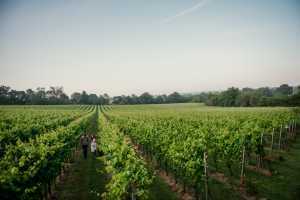
It isn’t known as ‘the garden of England’ for nothing — Kent is one of Britain’s greenest and sunniest spots, hence the nickname. The area is known for flourishing agriculture of all types, so expect an abundance of orchards and hop gardens as well as those undulating vineyards.
Must-visit vineyards: As one of the U.K.’s most prestigious houses, the Gusbourne Estate is well-equipped to host visitors for tours, tastings and even picnics within the scenic grounds. Or head to Simpsons’ in the beautiful Elham Valley, where Friday evenings play host to sunset tasting sessions during the summer.